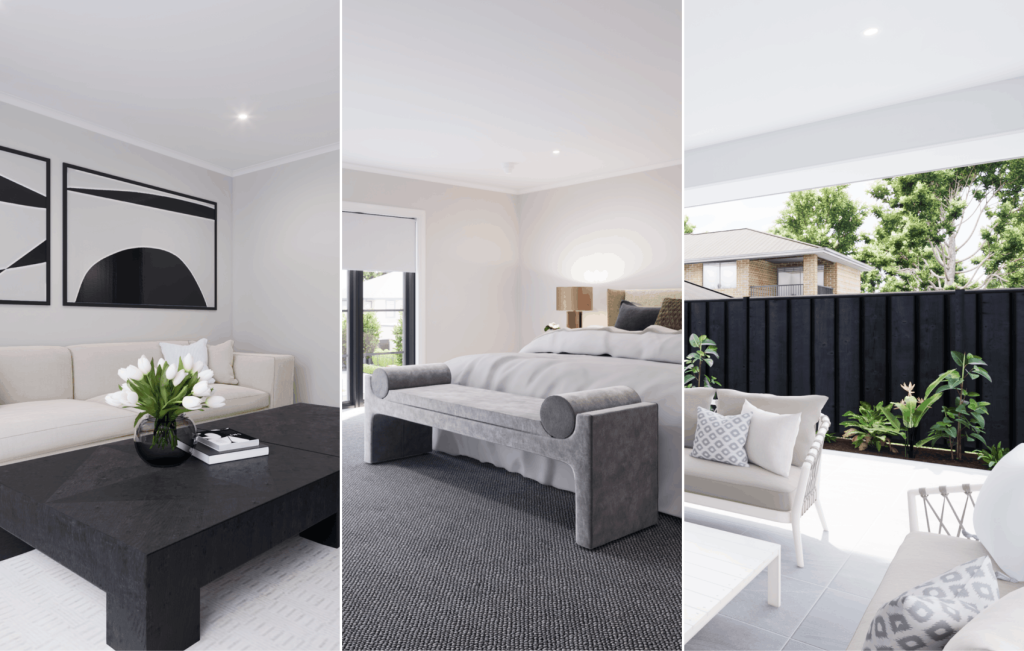
Buying a new home is one of the largest financial decisions a person will ever make. Yet most buyers are still being asked to commit based on 2D floor plans, static renders, and brochures that rely heavily on imagination.
That gap between what buyers need to feel confident and what traditional tools deliver – is exactly what 3D virtual house visualizers are designed to close. Here’s what they are, how they work, and why leading homebuilders are making them a core part of their sales process.
What is a 3D virtual house visualizer?
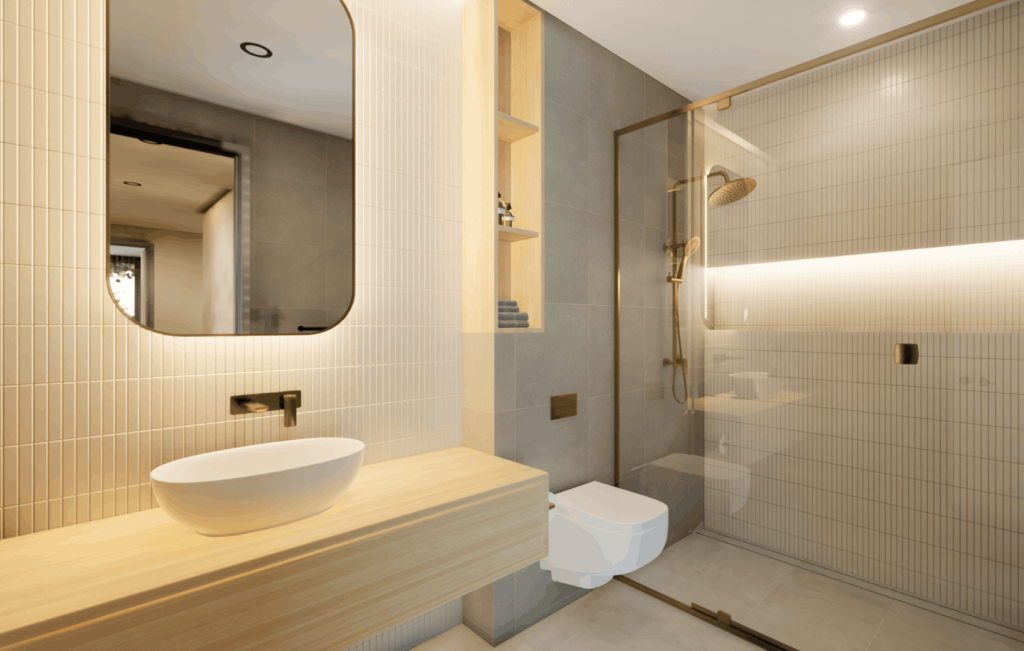
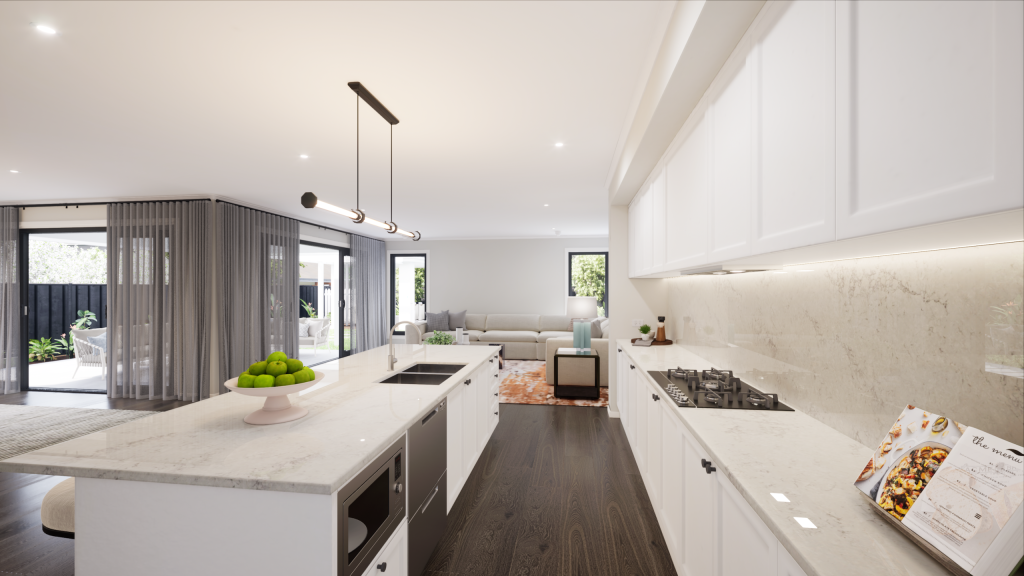
A 3D virtual house visualizer is an interactive, photorealistic digital environment that lets homebuyers explore a home before it’s built. Unlike a static render or a 2D floor plan, it’s an experience: buyers navigate spaces, switch between design options, compare elevations/facades and floor plans, and see how their selections affect indicative pricing – all in real time.
The distinction matters. A render is a snapshot, a floor plan is a schematic and a 3D visualizer gives buyers genuine spatial understanding without relying on interpretation – and without needing a physical home to walk through.
Why traditional tools fall short
2D floor plans require significant mental effort to interpret. Buyers must translate dimensions into livable space, visualize how rooms connect, and imagine how a home will feel – particularly difficult when that home doesn’t yet exist. The result is uncertainty, and uncertainty slows decisions.
The data reinforces this. According to the Zillow 2025 Consumer Housing Trends Report, floor plans are the third most important feature on a listing, and 93% of buyers say they are more likely to spend time looking at a property that includes one. Yet even when floor plans are provided, static formats leave critical gaps. A plan cannot convey scale, light, or spatial flow – and when buyers cannot visualize clearly, they hesitate, disengage or move to a builder who offers a more confident digital experience.
How buyer behavior has shifted
Homebuyers in the US and Australia increasingly approach home purchases the way they approach other major decisions – through digital research, self-guided comparison, and exploration long before speaking to a seller. They want at home access, instant design comparisons, and the ability to explore a home without scheduling an on-site visit.
At the same time, the market is moving fast. AR/VR and digital twin technology is now the fastest‑growing segment in proptech, driven by developers and buyers who expect immersive, self‑guided exploration as a baseline – not a bonus.
For homebuilders, this creates a widening gap. Those using interactive 3D experiences convert interest earlier, qualify buyers faster, increase upgrade sales and reduce friction across the journey. Those relying on static tools are being compared – and dismissed – before conversations even start.
How a 3D virtual house visualizer works
Buyers navigate layouts in walk or fly-through modes, building an intuitive sense of scale and flow without visiting a physical site. From there they can:
- Switch between facades/elevations and floor plan options instantly
- Zoom into materials and finishes and see selections applied to their actual homes
- See pricing update in real time as they explore upgrades and variations
- Save their configuration and share it – or pick up where they left off
The experience moves from presentation into genuine decision support. Buyers arrive at sales conversations with far greater clarity than those who relied on static materials alone.
The engagement impact is significant. A study by Google found that listings with virtual tours – specifically 360-degree – receive twice the engagement compared to those without. Homebuyers spend more time, explore more deeply, and arrive at sales conversations with far greater clarity than those who relied on static materials alone.
What it means in practice
For homebuyers, the primary benefit is clarity. Options feel considered rather than overwhelming. Layouts become intuitive rather than interpretive. Buyers arrive at sales conversations with clearer preferences and fewer unresolved questions.
For homebuilders, the commercial impact is direct:
- Faster sales cycles. Homes with 3D tours sell up to 31% faster and achieve sale prices up to 9% higher than those without. When buyers arrive informed, decisions progress with greater certainty.
- Higher upgrade uptake. Buyers who see finishes and upgrades in context – understanding how choices work together and what each costs – are more confident in their selections. That confidence translates into higher upgrade value per contract.
- Fewer late-stage changes. Decisions made through an accurate interactive environment tend to stick. Buyers who have explored options visually before committing make fewer reversals, reducing post-contract administration and cost.
- More efficient teams. Sales consultants spend less time explaining and more time progressing. Design studio appointments run more predictably. Every team benefits from a homebuyer who arrives at each stage already prepared.
Where homebuilders are applying it
- Off-the-plan sales. Interactive 3D experiences replace imagination with genuine visual understanding, giving buyers the confidence to commit before construction begins.
- Extending the display home. A digital environment showcases every facade, floor plan, and upgrade option across markets, at any time – without additional site investment.
- Design studio appointments. Buyers who have explored options before their formal appointment arrive prepared. Sessions become more focused, decisions more considered.
- Marketing and campaigns. Photorealistic renders, cinematic videos, and 360° tours generated from the same platform give teams a complete, always-current visual library ready across every channel from day one.
What to look for in a 3D virtual house visualizer
Not all tools deliver equally. The most effective platforms share five core capabilities:
- Photorealistic quality. High-fidelity visuals build trust. Low-quality alternatives undermine confidence rather than supporting it.
- Real-time customization. The ability to switch layouts, compare facades, and update finishes instantly is what separates genuine exploration from a static gallery with added steps.
- Integrated pricing visibility. Buyers who can see how upgrade choices affect cost as they explore make more considered decisions that are less likely to unravel later.
- Multi-device access. The experience should reach buyers wherever they are – not just at a desktop during business hours.
- One connected platform. A system that spans marketing, sales, and design studio creates consistency at every buyer touchpoint. Disconnected tools introduce gaps that erode trust and slow decisions.
The new standard in homebuilding
3D virtual house visualizers are not an emerging trend. They are the next generation of homebuilding – already being used by leading builders to drive stronger pipelines, higher upgrade uptake, and more efficient sales processes.
The homebuilders investing now are not simply improving buyer experience. They are establishing what the standard looks like – and compounding that advantage with every contract they close.
Want to see how it works in practice? Explore the Away Digital Home platform or book a short demo with our team.
FAQs
What is a 3D virtual house visualizer?
A 3D virtual house visualizer is an interactive, photorealistic digital environment that allows homebuyers to explore a home before it is built. Unlike static floor plans or renders, buyers can navigate spaces, compare design options, and see how selections affect indicative pricing – all in real time.
How does a 3D virtual house visualizer help homebuilders?
It improves the quality and readiness of every buyer who enters the sales process. Buyers arrive informed, sales conversations start further along, and design studio appointments run more efficiently. The result is faster sales cycles, higher upgrade uptake, and fewer late-stage changes.
What should homebuilders look for in a 3D virtual house visualizer?
The most effective platforms offer photorealistic quality, real-time customization, integrated pricing visibility, multi-device access, and a connected environment that spans marketing, sales, and design studio. Tools that operate in isolation create inconsistencies that slow decisions and erode buyer confidence.
How does 3D visualization support the design studio process?
When homebuyers have access to a 3D selection environment before their formal design studio appointment, they arrive already familiar with options, finishes, and upgrade implications. Appointments become more focused and efficient, decisions are better considered, and the likelihood of post-contract changes is significantly reduced.