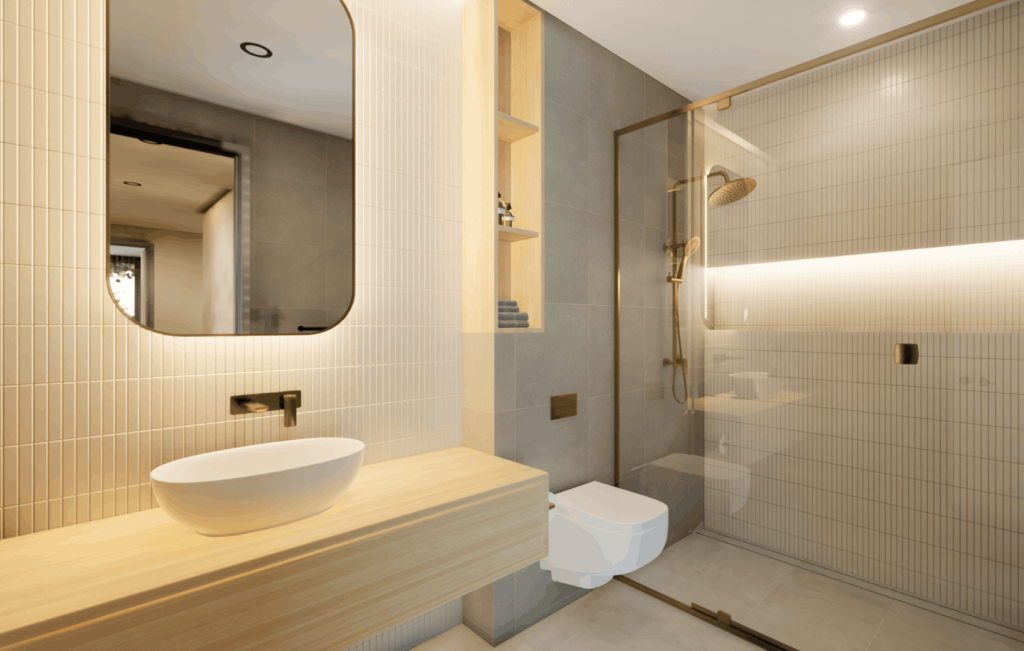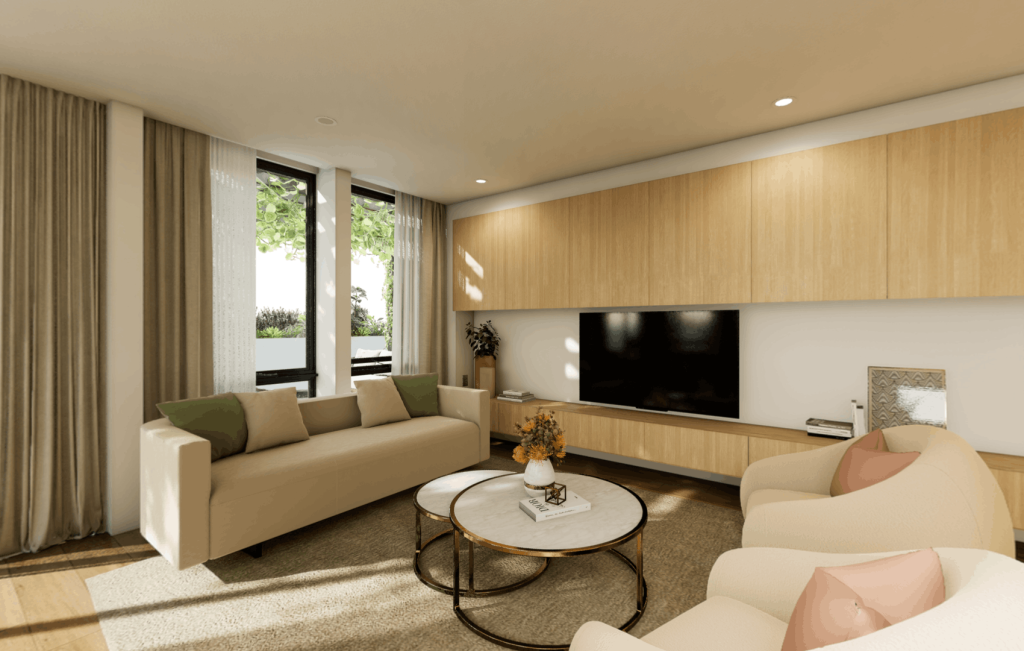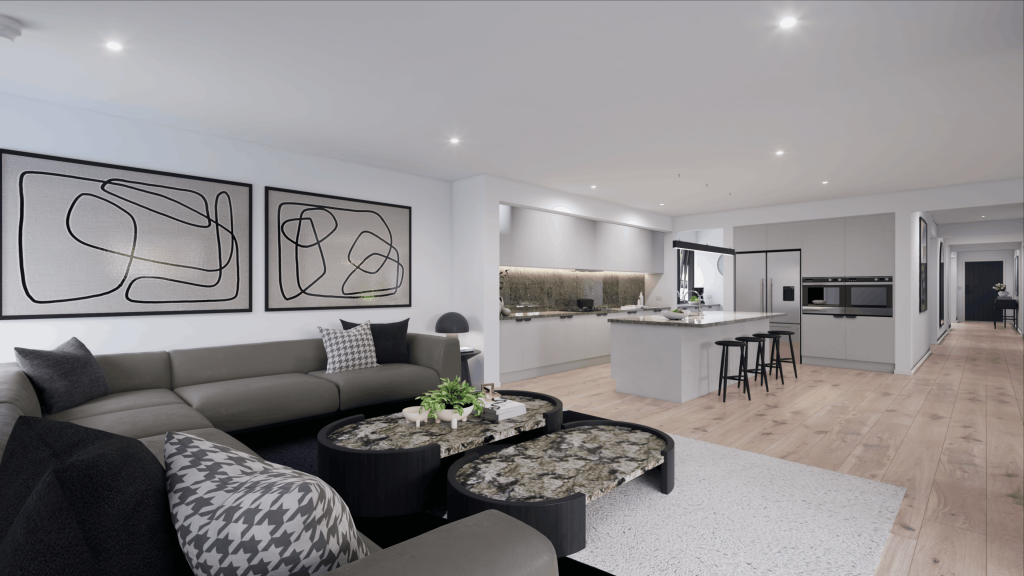
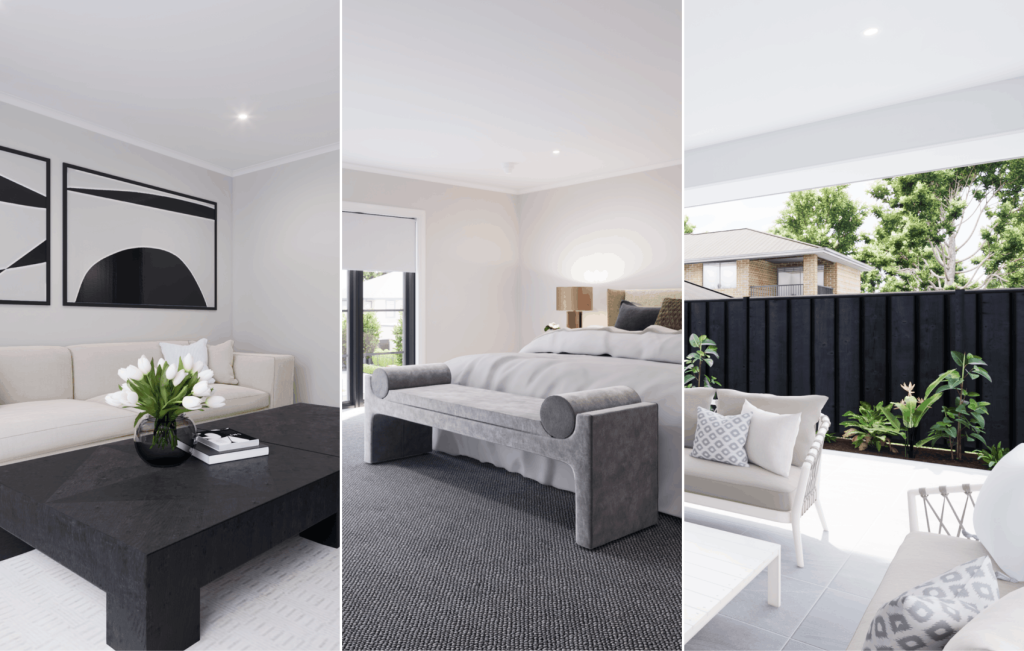
Every builder has a folder of beautiful renders somewhere. A hero shot of the facade at golden hour, a kitchen with perfect light, maybe a 360 tour stitched together for the website. They look good, they get likes on Instagram, and for most builders, that is roughly where their usefulness ends.
The problem is what builders have been expecting of these renders. A static image can show a buyer what a home looks like from one angle, in one configuration, on one good day. It cannot answer the question that actually drives a sale, which is what the home will look like once the buyer has made it theirs. That gap is where a lot of marketing budget stops earning their keep.
What static and interactive assets are actually built to do
A render is an output. It is the end product of a creative process, fixed at the moment it was finished, incapable of responding to anything a buyer does after they see it. It can be reused, but it cannot be changed by the person looking at it.
An interactive platform is something else entirely. It is an environment a buyer moves through and makes decisions inside. They can swap a facade/elevation, change a benchtop, adjust a ceiling height, and watch the home update in front of them. The render shows a possibility. The interactive experience lets the buyer test possibilities against their own preferences until they land on the one that feels right.
That distinction matters more than it sounds like it should, because it changes what the asset is capable of doing for the business. A render markets a home. An interactive platform sells one.
Where render-only strategies plateau
Render-heavy marketing tends to perform well in the early, awareness-building part of the funnel by drawing attention and it gives a builder something polished to put in front of an audience that has not yet engaged with a specific design.
The limitations arrive once a buyer is genuinely interested. At that point they stop wanting to look at the home and start wanting to configure it, and a static asset has nothing left to offer. The buyer is reliant on brochures, sample boards, and a sales consultant’s description of what a different facade/elevation, floor plan option or floor finish might look like. The platform that did the heavy lifting of getting their attention has no role in downstream in the process come decision time.
This is the challenge that render-only strategies present. They are excellent at the top of the funnel and largely absent from the middle and bottom, which happens to be where deals are won or lost. Builders relying solely on renders are, in effect, marketing well and selling the same way the industry has sold for decades.
What interactivity actually changes commercially
Lead generation improves because an interactive home gives a builder a reason to ask for contact details. A buyer who has been exploring facades and floor plans is being asked to save their progress, not just give their email address for a brochure.
Conversion improves because uncertainty is one of the more consistent reasons sales conversations stall. Renders ask buyers to imagine; interactive platforms let them confirm. According to NAHB’s research on what home buyers really want, today’s buyers are increasingly focused on personalizing their home rather than accepting a standard package, which means the platform doing the configuring carries more of the sales conversation than it used to.
Pricing clarity is one of the more underrated commercial advantages. A buyer exploring upgrades without seeing cost in real time is still operating on incomplete information. When live pricing runs alongside the visual experience, the gap between what a buyer configures and what they are prepared to commit to narrows considerably. Decisions that stall because the buyer is unsure what something will cost, become decisions that move because the answer is already on screen.
Option and upgrade sales improve for similar reasons. A premium benchtop or a ceiling height upgrade is a much easier sell once a buyer can see it rendered correctly in their own kitchen.
Welcome Homes’ research puts the cost of change orders on a typical build at 5 to 10% of contract value, a figure that tends to fall when buyers confirm their selections visually before signing.
Most builders run separate tools for marketing, sales, and their design studio. The cost is not just the vendor spend. It is the rework when a buyer’s sales-stage selections do not carry cleanly into the design studio appointment, the delay when a consultant needs to rebuild context that was already established digitally, and the brand inconsistency when the experience a buyer had online bears little resemblance to the one they have in the room. A platform that runs marketing, sales, and selections from a single environment removes that friction at every handoff point.
What a serious platform needs to do
Interactivity has become a marketing buzzword almost as quickly as visualization did, so it is worth being specific about what actually separates a platform that functions as a sales tool from one that is a more expensive version of a render.
It needs to let buyers change real variables, not click through a handful of pre-rendered alternatives. Facades, floor plans, finishes, and upgrades should be genuinely adjustable, with the home updating to reflect the actual combination the buyer has selected rather than approximating it.
It needs to generate usable output from every session. A platform that only exists for the buyer in the moment is a marketing tool. One that produces a selection report, current renders, and a record of what was explored becomes a sales tool and a data source. Something the business can act on after the buyer has left the session.
And it needs to hold up technically at the level buyers now expect from anything digital they engage with. A clunky or slow interactive experience does more reputational damage than a polished static render ever could.
Where Away Digital Home fits
This is the standard Away Digital Home was built to meet. Buyers navigate a fully interactive, photorealistic version of their home, switching facades, comparing floor plans, applying finishes, and watching pricing update in real time. Every session produces a selection report, current renders, and a cinematic walkthrough, giving marketing, sales, and design studio teams a shared source of material rather than three separate production processes.
The renders a builder already has are not wasted in this shift. They still do useful work at the top of the funnel (and if new ones are needed – the platform can produce them too). The opportunity is in what happens next, once a buyer is interested enough to want to make the home theirs. That is the point where a platform needs to become a tool the business runs on, not an image the business shows.
If you want to see what that looks like in practice, check out our features in more detail and judge it against your own checklist.