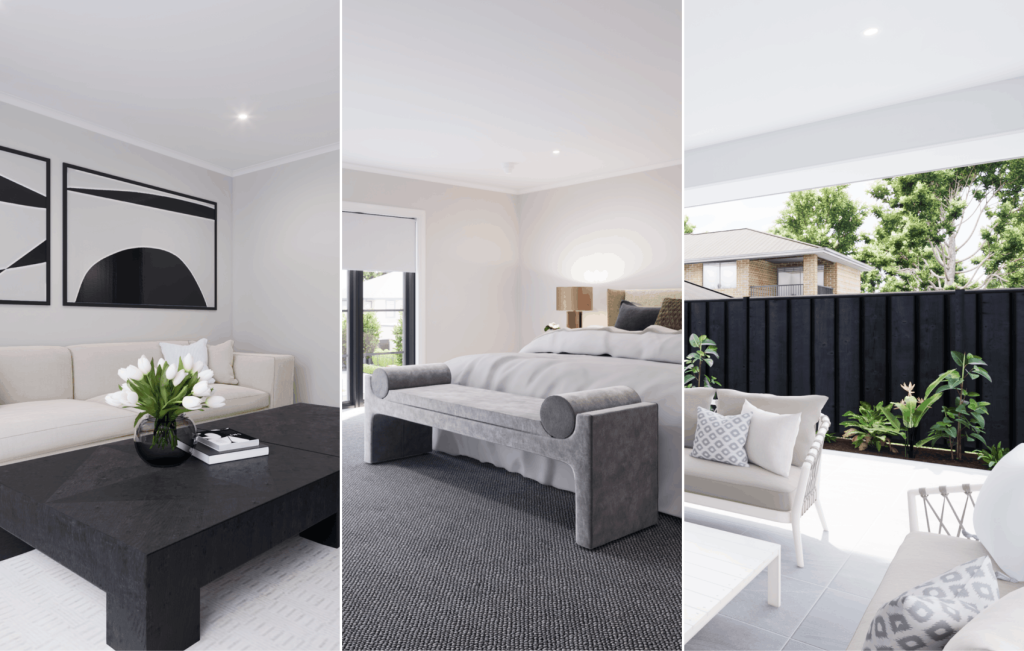

There has always been a gap in new home sales between what homebuyers can see and what they are being asked to commit to. Builders have managed that gap for decades with marketing material that will help to give buyers a general idea of the outcome, along with relying on in-person experience and a good sales consultant in a display/model home. That approach worked well enough when it was the only option. In recent years however, it’s no longer the only option, and buyer expectations have shifted accordingly.
The question for homebuilders now is what kind of digital experience actually moves homebuyers forward, and where the industry currently falls short of answering it.
How buyer behavior has shifted
First impressions are increasingly being formed online, before a buyer sets foot in a display home or speaks to a consultant. The builder whose digital presence communicates credibility, clarity, and genuine personalization is the builder who earns the buyer’s attention. The builder whose online experience amounts to a rendered facade image and a PDF floor plan is already being perceived as old-fashioned.
The shift is generational as much as it is technological. Younger buyers, who now make up the largest share of new-home purchasers, have grown up configuring products, comparing options, and completing significant purchases entirely online. They bring those reference points into the home search. What feels like a basic expectation to them: the ability to explore a design, adjust options, and see the result in real time, is still genuinely uncommon in new home sales.
The traditional buyer journey and where it falls short
The conventional new home sales process runs roughly as follows: a buyer encounters advertising or a listing, visits a display home if one exists, receives a printed brochure, meets with a consultant, and is shown static renders or floor plans of the design they are considering. Selections are then made through a combination of material samples, verbal guidance, and the buyer’s own imagination.
Display homes or consultants are not ineffective by any means, but the process depends on buyers being able to translate what they see in a brochure or a sample board into a coherent mental picture of a finished home. Most buyers cannot do this reliably. A floor plan communicates dimensions , but it does not communicate proportion, light, or atmosphere. A material sample shows a finish in isolation, not how it would look against the cabinetry and floor finishes . A static render shows one configuration from one perspective.
When buyers are asked to imagine what they cannot see, they make assumptions. Some of those assumptions turn out to be wrong after the contract is signed, and the result is late-stage change orders, delays, and rework that the builder absorbs at a direct cost to margin. The hidden cost of ambiguity in the selection process is one of the most consistent sources of preventable expense in residential construction.
What today’s buyers expect before speaking to sales
The 2025 New Construction Survey found that hidden costs and unexpected upgrades ranked as the top pain point in the new home buying process, cited by 35% of respondents, and that nearly nine in 10 buyers wanted clarity on total home costs and fees before proceeding. Those findings point to a buyer who wants to understand what they are committing to before the conversation becomes contractual.
Technologies reshaping the buyer journey
The technology that makes immersive, interactive new-home experiences possible has advanced considerably in recent times. Real-time rendering engines, which were originally developed for gaming, have reached a level of visual fidelity, surpassing traditional architectural renders in most practical contexts. Browser-based 3D technology has made it possible to deliver these experiences without requiring buyers to download specialist software or use dedicated hardware. A photorealistic, fully navigable digital home can now reach any buyer through a standard web browser.
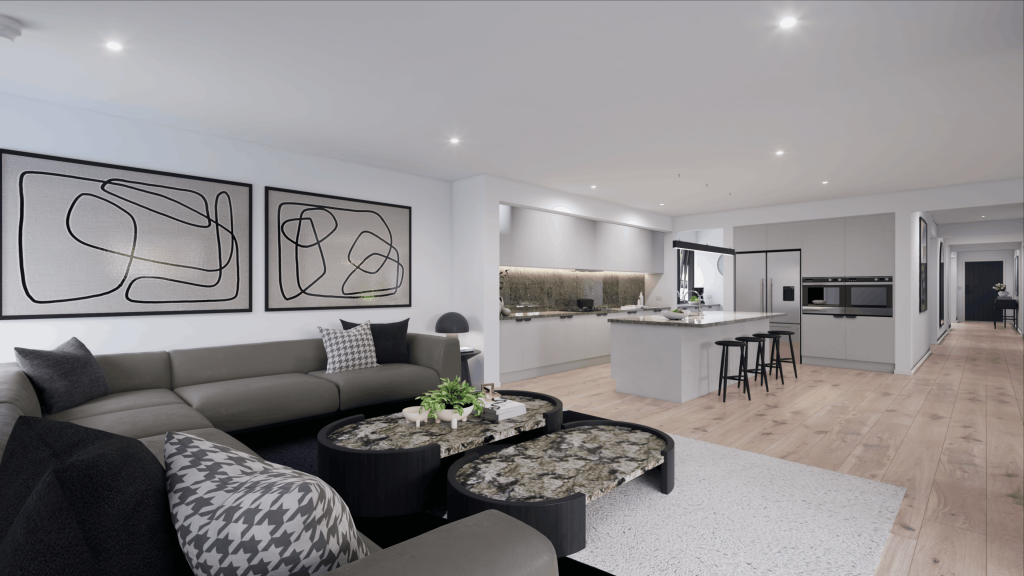
Away Digital Home is built on this technology. The platform gives builders a single connected environment for marketing, selling, and presenting new homes before a physical display exists. Buyers navigate a fully interactive, photorealistic digital home in first person: walking through rooms, exploring in drone mode, or moving instantly between spaces. They can switch between facade options and floor plan variations, apply materials and finishes to actual surfaces, and watch live pricing update in real time as they make each selection.
When a buyer can change the kitchen benchtop and immediately see how it sits against the cabinetry and flooring they have already chosen, the decision they are making is grounded in evidence. Decisions that would previously have required a follow-up appointment, or a revision after contract, can be resolved in the session itself.
Every session generates a selection report, 2K images, and a cinematic walkthrough video, all saved to a buyer portal. The same digital home that drives the sales conversation also produces the marketing asset library, removing the need for separate render commissions or third-party production. Analytics built into the builder portal track which designs, finishes, and upgrades buyers engage with most, giving sales and marketing teams access to insight that was previously difficult to capture systematically.
Conclusion
The new home sales journey has always moved through the same stages. What has changed is where buyers are doing the work at each of those stages, and how much they expect to have resolved before they sit down with a consultant. Builders who meet them there, with an experience that builds confidence and answers the questions buyers are already carrying, arrive at every sales conversation with a material advantage. Those who do not are hoping a good consultant can recover the ground the digital experience left behind.
For builders looking to turn their design studio into a high-performance revenue engine, this is worth reading.