Upgrade revenue is one of the most commercially significant levers a homebuilder has – the margin on a premium kitchen, an elevated facade or a stone benchtop package can be just as strong as the margin on the base home itself. Yet many homebuilders still leave a substantial portion of that revenue on the table, because their traditional selection tools can only show upgrades as static and generic images – not applied to the actual home homebuyers are picturing.
Why upgrade brochures underperform
Sample boards, printed sheets and display home photography are the tools most homebuilders rely on to present upgrades – and all three share the same limitation. None of them show homebuyers what an upgrade looks like in their actual home design.
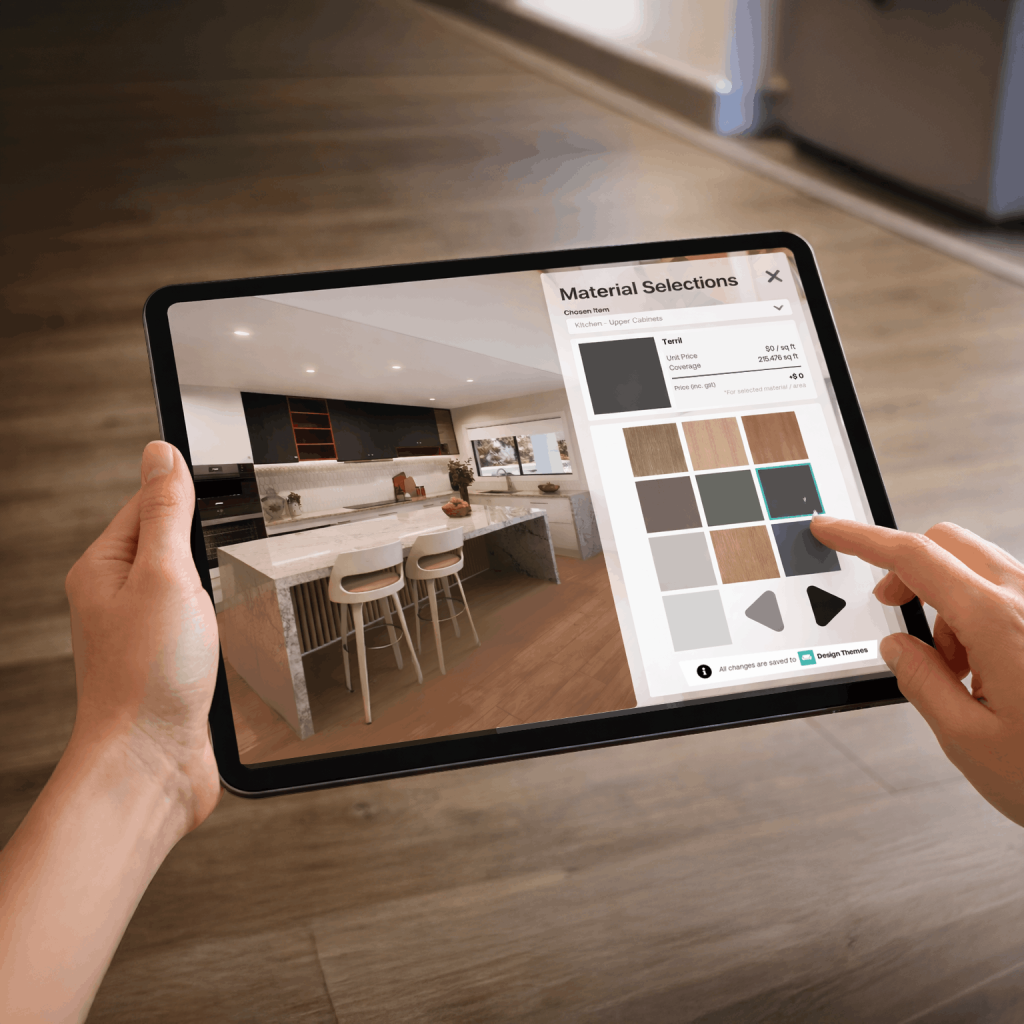
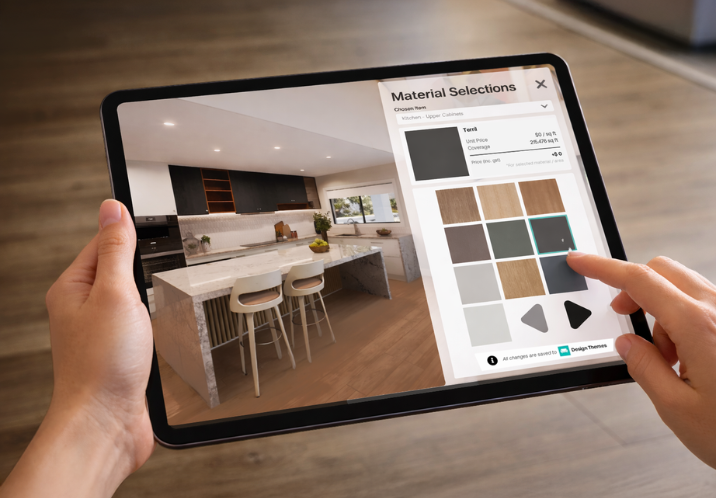
A homebuyer reading “1 1/4 inches stone benchtop” in a selections guide is only processing a fact. The same homebuyer seeing that benchtop in their actual kitchen, next to their chosen cabinet color, with pricing updating instantly, is experiencing a future home – and that experience is what moves them to commit.
Without it, the cost becomes the only reference point. When caution wins, the safe choice is the standard inclusion, and the upgrade gets deferred, declined or forgotten.
The upgrade categories where the visual gap is biggest
Some upgrades are easy enough to judge from a photo – a paint color, for instance. Others depend on scale, proportion or how elements sit together in a room, and simply don’t translate from a flat image. Below are the categories where that gap matters most – and where homebuyers are most likely to upgrade once they can see it properly.
| Upgrade category | Why visualization matters |
| Kitchen configurations | Counter materials, cabinet colors and ceiling height all interact. Each combination looks different. Static samples don’t show the combination. |
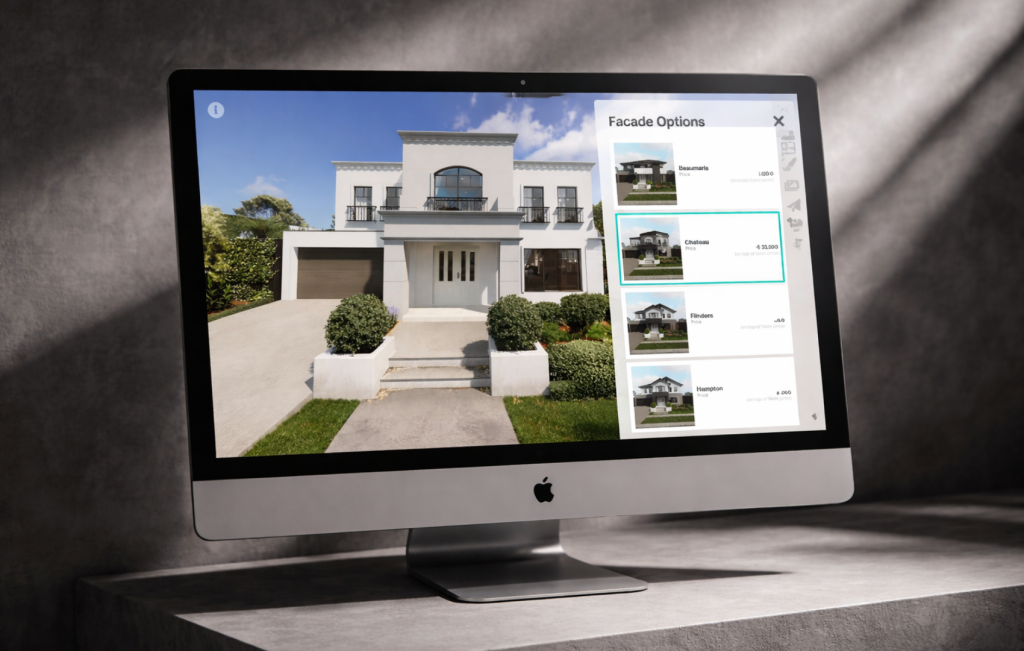
| Facade and elevation options | Scale, proportion and material texture only read correctly at full scale. A printed sheet cannot convey how a facade will look in a built home. |
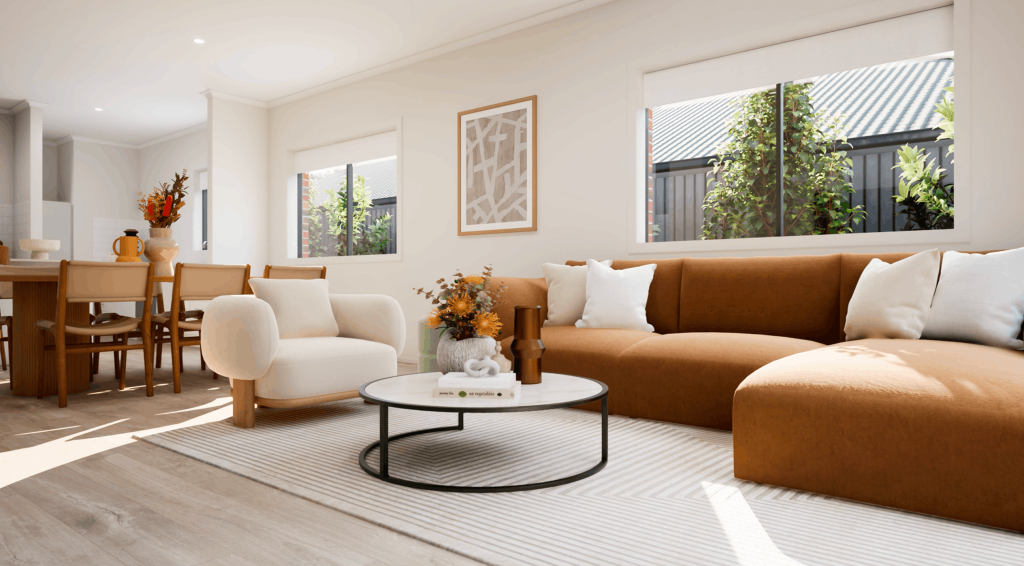
| Flooring and internal finishes | Color schemes read differently across large floor areas than they do on a sample board. The full-room view changes the decision. |
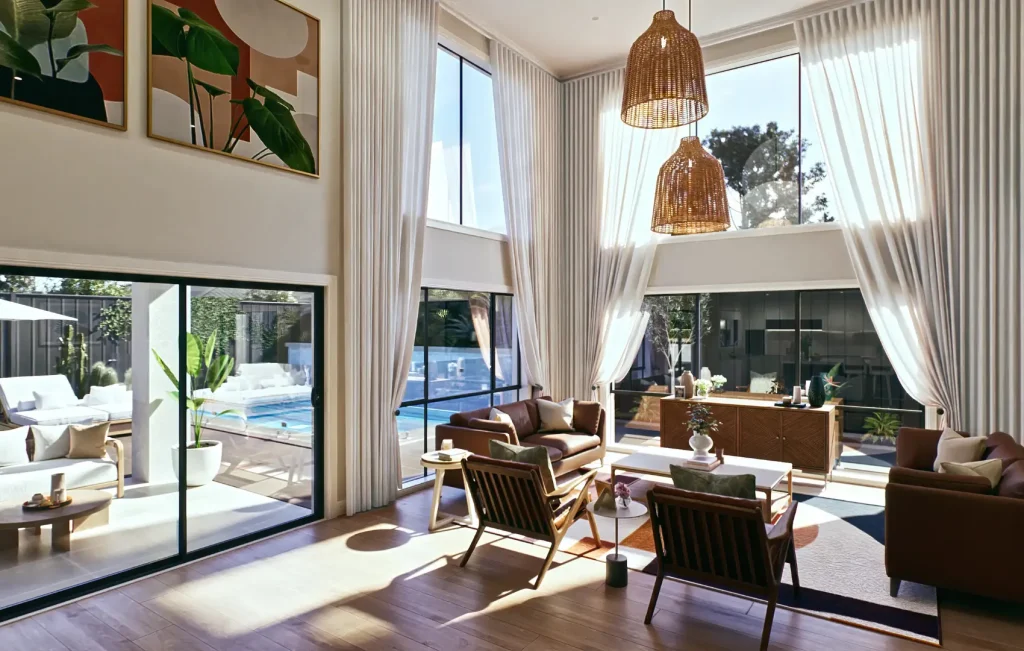
| Structural upgrades | Ceiling height, room configurations and layout changes affect spatial feel in ways that floor plan dimensions cannot communicate. |
| External color schemes | Combinations of render, trim, roof and cladding only make sense when seen together. Separate sample cards produce different decisions than a complete exterior view. |
How to present premium choices without overwhelming homebuyers
Start with the base, then show the upgrade
Homebuyers need a reference point. Comparing a standard inclusion to a premium alternative in the same environment – with pricing updating as they switch – makes the value of the upgrade visible rather than theoretical.
Show upgrades in combination, not in isolation
A premium kitchen reads differently when the flooring, cabinetry and benchtop are considered together rather than selected one at a time. Presenting choices as a coordinated package reduces cognitive load and produces more confident, higher-value selections.
Let homebuyers take the experience with them
Without a clear record of what they chose, decisions made in an appointment often change when homebuyers get home. A personalized brochure or image pack built from their actual session – showing their choices, in their home, at the price they selected – gives them something concrete to revisit, share with a partner and return to with confidence.
Tracking upgrade interaction and selection rates
An interactive environment does more than help homebuyers decide. It generates data that most homebuilders don’t currently have access to. When homebuyers explore upgrades digitally, their behavior is visible: which upgrades they viewed, how long they spent comparing options, which premium choices they explored but didn’t select.
- Upgrades with high interaction rates but low selection rates are typically price-sensitive or lack visual clarity – both of which are addressable
- Upgrades that homebuyers explore deeply before selecting indicate strong appetite and strong visual impact
- Upgrade categories that homebuyers skip entirely may not be presented effectively, or may need repositioning
Lead volume tells you who showed up. Interaction data tells you what they actually wanted.
A practical framework for sales consultants
The interactive environment changes the role of the sales consultant in the upgrade conversation. Less explaining, more guiding.
- Before the appointment: review which upgrades the homebuyer has already explored. Enter the conversation knowing their preferences rather than discovering them from scratch.
- During the appointment: show the standard inclusion first, then the premium alternative in the same space, letting the visual do the work before the price conversation begins.
- At close: generate a selections summary from the session. A homebuyer who leaves with a personalized brochure showing their exact choices, in their home, at their pricing, is significantly less likely to reverse their decisions between the appointment and contract signing.
Turning upgrade insight into commercial results
Away Digital Home gives homebuilder teams the interactive environment, the session outputs and the analytics to run upgrade conversations that convert. Book a 20-minute demo to see how it works in practice.
For a broader look at why static assets fall short across the entire homebuying journey – not just upgrades – this is worth reading: Why renders alone are no longer enough: What an interactive visualization platform delivers.