Building a new home means making dozens of decisions before a single wall goes up. Flooring, cabinetry, facades, fixtures, ceiling heights – each one feels significant and permanent. It is not surprising that many homebuyers arrive at design appointments uncertain, spend the session second-guessing themselves, and leave with lingering doubt about whether they chose well.
That hesitation is not a character flaw. It is a predictable response to being asked to commit to things they have never been able to properly see.
Why home design decisions are so hard to get right
The traditional selection process asks homebuyers to make high-stakes decisions from low-resolution information. Sample boards show materials in isolation. Brochures show finished rooms that do not match the homebuyer’s actual floor plan. Floor plans show dimensions without conveying how a space will feel to live in.
None of them answer the question homebuyers are actually asking: what will my home look like when all of these choices come together?
Without a clear answer, homebuyers default to caution – choosing the safe option, deferring upgrades they actually want, or changing their mind after the appointment and creating rework that costs their builder time and erodes confidence in their own judgment.
Where confidence breaks down across the journey
Uncertainty concentrates at specific moments. Each one has a different cause and a different cost.
| Decision point | The problem | The cost |
| Before the first design appointment | Homebuyers are looking through images of fixtures and fittings from websites. | Homebuyers arrive unprepared, which slows the entire appointment |
| During color and material selection | Homebuyers are comparing individual products, not visualizing a complete home | A tile on a sample board reads differently across the entire bathroom |
| When comparing upgrade options | Without seeing the upgrade in context, the cost is hard to justify | Homebuyers default to the base inclusion rather than committing to higher upgrades |
| Before final approval | Accumulated uncertainty surfaces all at once | Hesitation, change requests, and lower satisfaction with the outcome |
What an interactive digital design studio changes
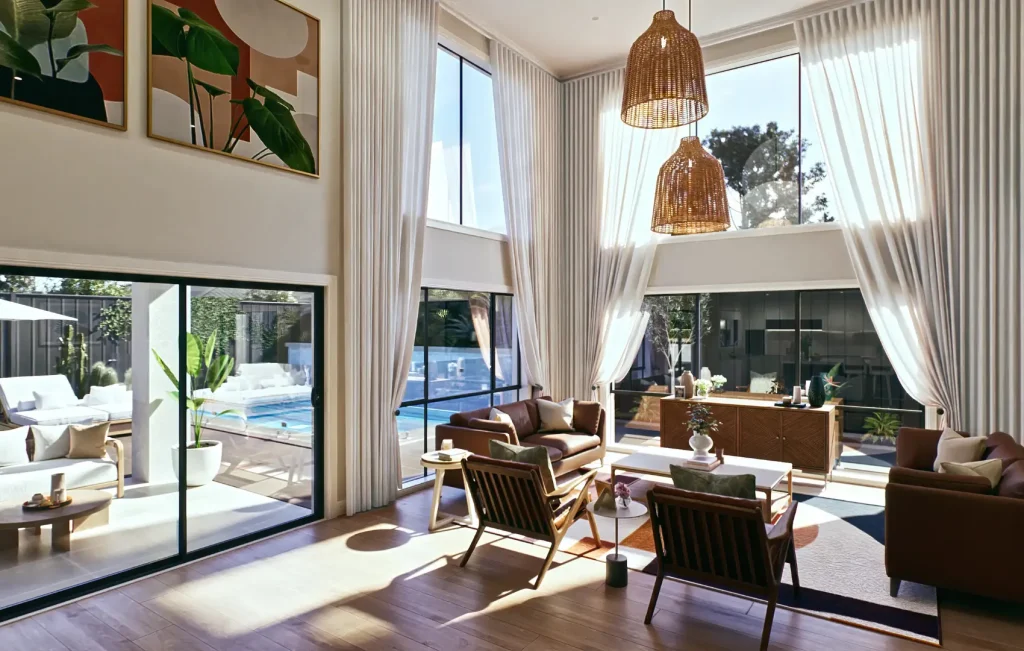
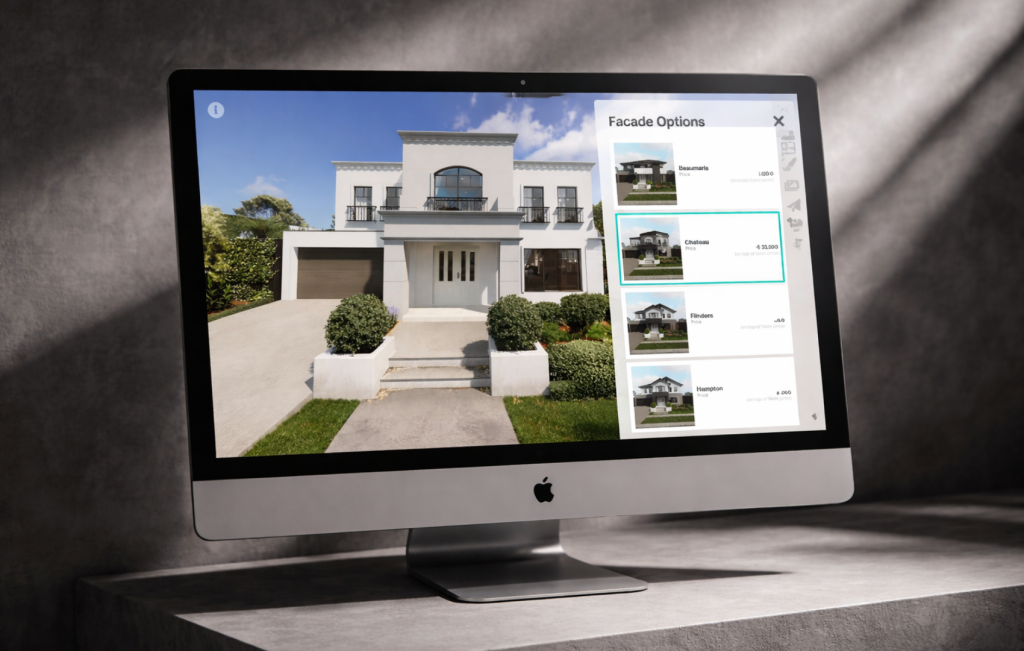
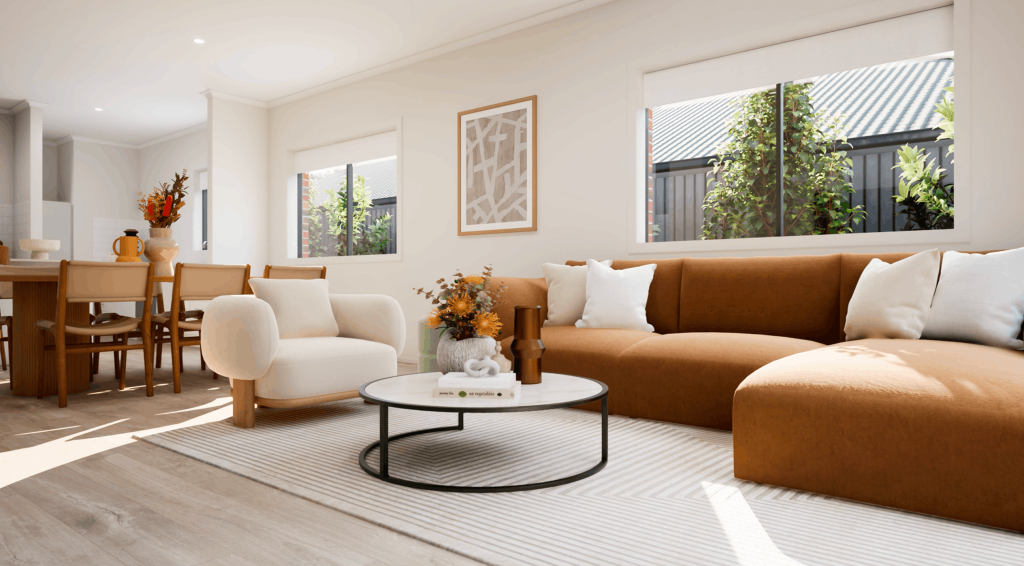
An interactive digital design studio replaces imagination with visualization. Homebuyers explore their actual home – floor plan, facade, structural configuration – and make home design selections against that specific context rather than against generic samples and reference images.
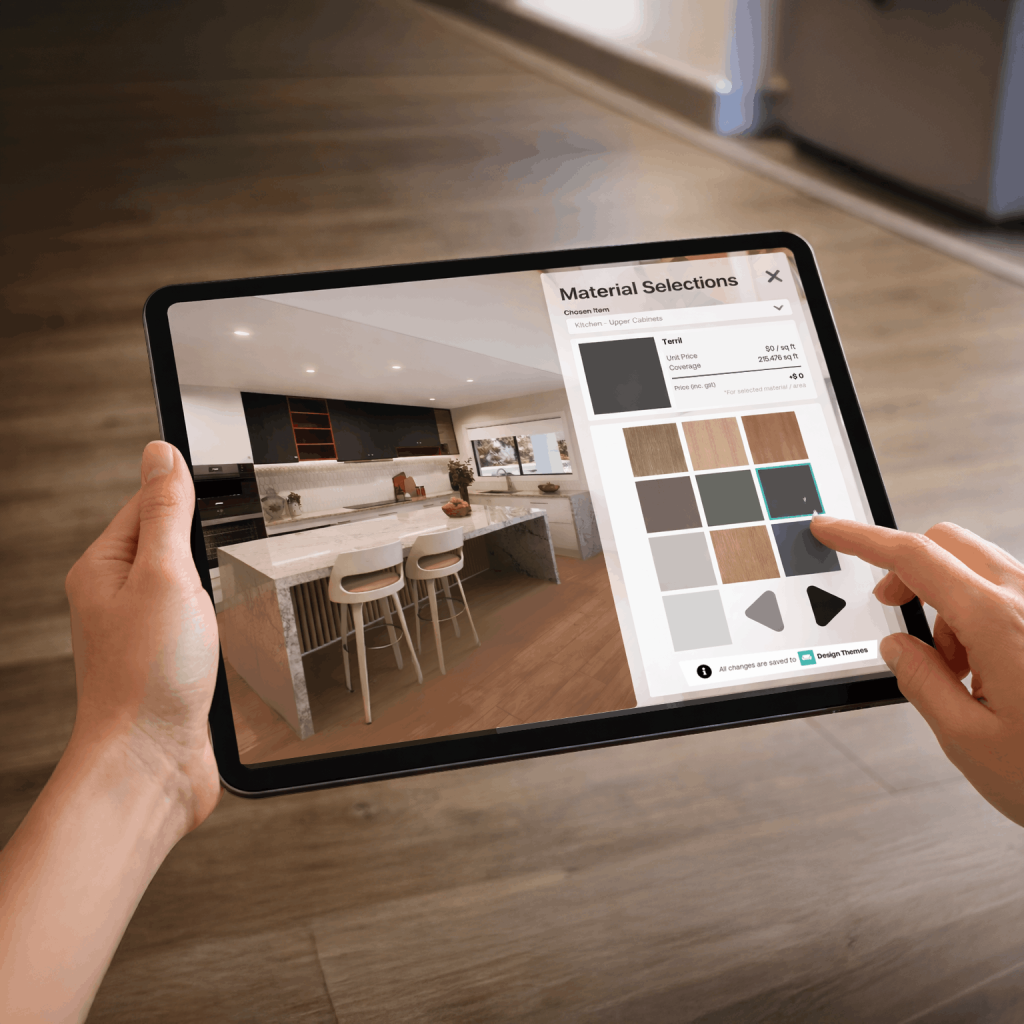
The difference is immediate. Homebuyers can see what 40 mm stone benchtops look like in their kitchen, with their cabinet color, at their ceiling height. They can compare the standard inclusion against the upgrade in the same environment, with pricing updating as they switch. They can walk through the completed home with all selections applied before committing to anything.
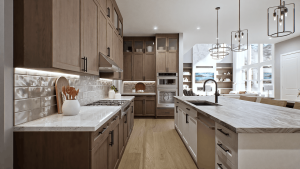
Home design visualization at this level does not just help homebuyers choose – it helps them understand and feel confident with what they are choosing. That understanding is what produces real confidence rather than a decision made under time pressure.
How buyer confidence connects to commercial outcomes
A homebuyer who arrives at their design appointment having already explored their options in an interactive environment is a fundamentally different prospect.
Upgrade decisions are easier because the value is visible rather than theoretical – homebuyers who can see the upgrade in context, in their own home, at a visible cost, commit to premium options at a higher rate. Selections made with this level of clarity are also more likely to stick, reducing the post-appointment changes and rework that cost builders time and create friction in pre-construction.
For Design Studio teams, the shift is significant. Appointments become more productive, consultants spend less time explaining and more time progressing, and every session ends with decisions that were made with confidence rather than under duress.
More than a design tool – a decision tool
The selection process should ensure that homebuyers make decisions with confidence. Homebuyers should not feel pressured, and they should be provided with the time and tools to properly consider. An interactive digital design studio tool gives homebuyers both: the ability to explore their home design decisions at their own pace, revisit selections, and see how everything comes together before committing.
That is what makes the difference between a homebuyer who signs with confidence and one who second-guesses their choices and stalls.
Away Digital Home transforms every home design into a photorealistic, interactive experience – supporting your marketing, sales and Design Studio teams in one connected platform. Book a 20-minute demo to see it in practice.