How digital home experiences extend the display home’s reach – and what homebuilders stand to gain
The display home has always been one of the most powerful tools in residential homebuilding. Walking buyers through a finished space – letting them open a door, stand in a kitchen, feel the scale of a room – builds the kind of confidence that closes sales. That hasn’t changed.
What has changed is when the decision-making starts. New home buyers research extensively online before they ever contact a builder or visit a display. By the time a buyer walks into a display village, their shortlist is usually already set. Homebuilders who weren’t present during that earlier research phase rarely make the cut.
The question isn’t whether to maintain display homes. It’s whether display homes alone are enough to serve a buyer journey that starts weeks earlier, in digital channels.
Where physical display homes still work
For buyers who are close to a decision, a physical walk-through remains irreplaceable. But display homes carry structural constraints that no amount of investment fully solves:
Personalization
A single display shows one facade, one floor plan, and one selection package. A buyer interested in a different elevation or kitchen configuration has to imagine it. According to NAHB’s 2024 What Home Buyers Really Want study, 25% of new home buyers cite the ability to customize their home’s design as a primary reason for choosing new over existing. Buyers who can’t explore options digitally often move on before a conversation begins.
Cost
A display home costs significant capital to build, furnish, and maintain – covering one design, in one location. The economics don’t scale.
A well-configured digital home experience addresses all four constraints simultaneously – available everywhere, always on, fully configurable, and deployed at a fraction of the cost of a physical display.
Time
A new display home takes months to build – and that timeline doesn’t account for land titling, trades, or fitout. During that window, a new design has no physical presence and no sales momentum. A digital home experience can go live before construction begins, putting the design in front of homebuyers from launch and compressing the time between release and first sale.
Geography
A display village in one suburb cannot serve a buyer researching land in a region two hours away. Homebuilders with displays in three locations are invisible to buyers searching in ten others.
Availability
Display homes operate on set days and hours. New home buyers research at night, on weekends, and during lunch breaks – often at times when your display is closed and a competitor’s digital experience is not.
What a digital home experience adds
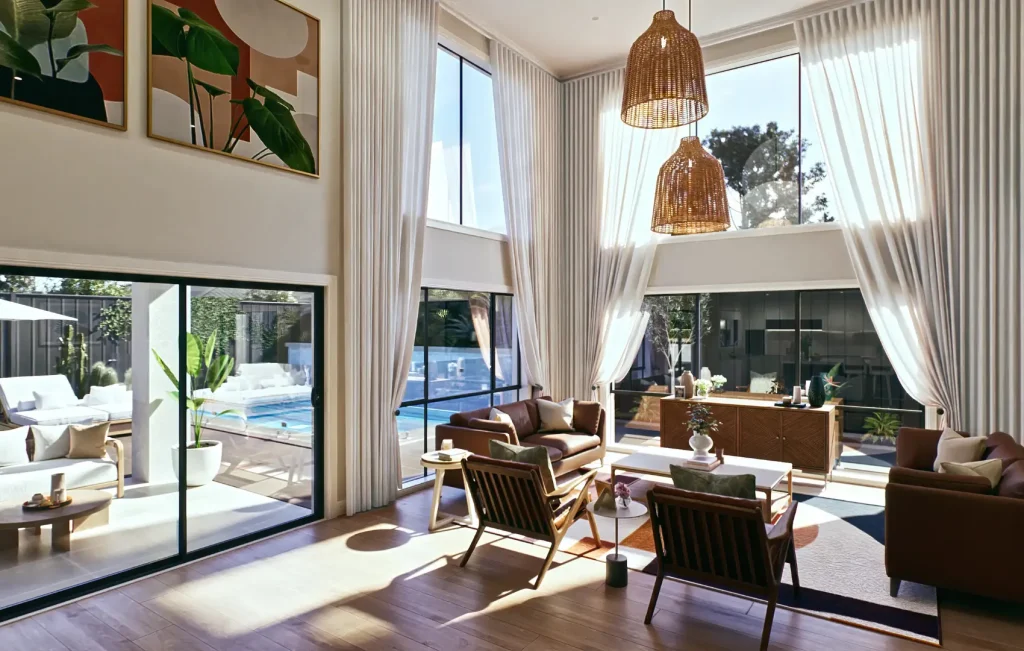
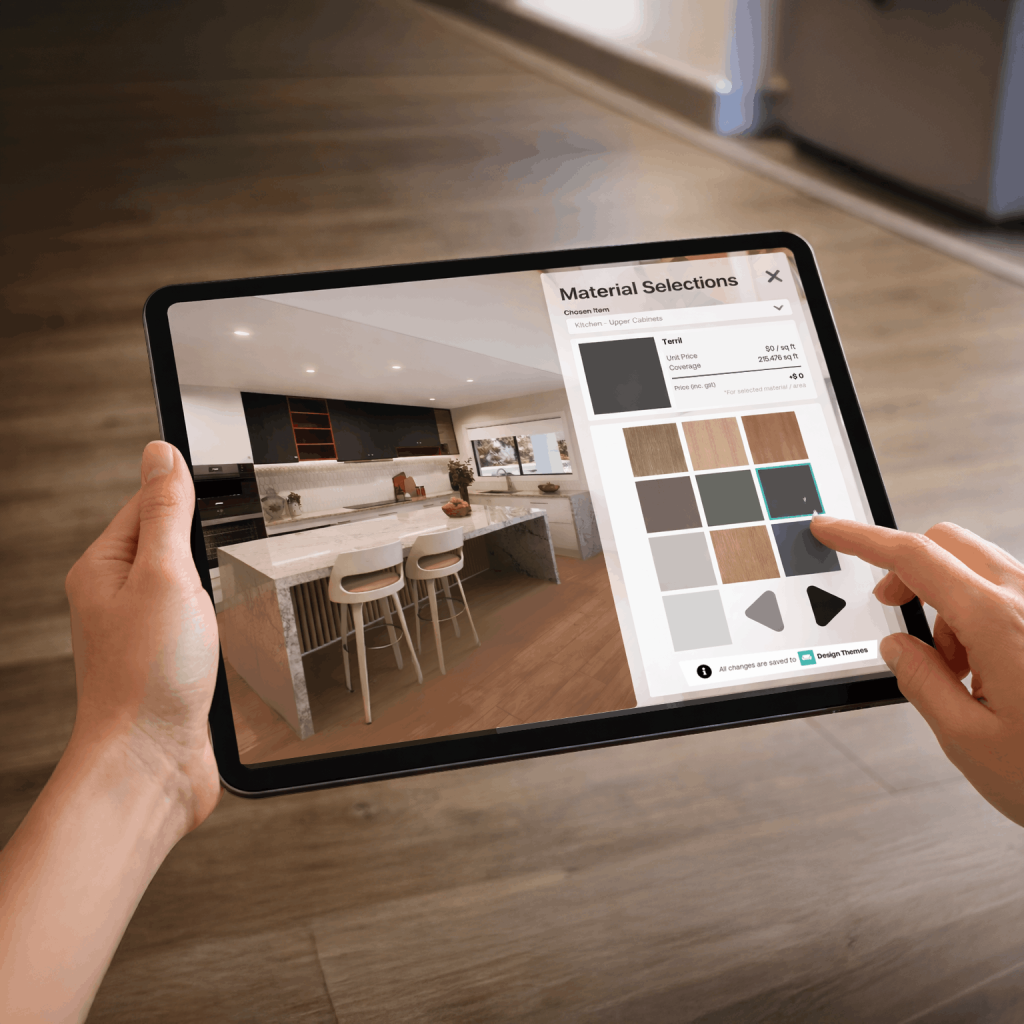
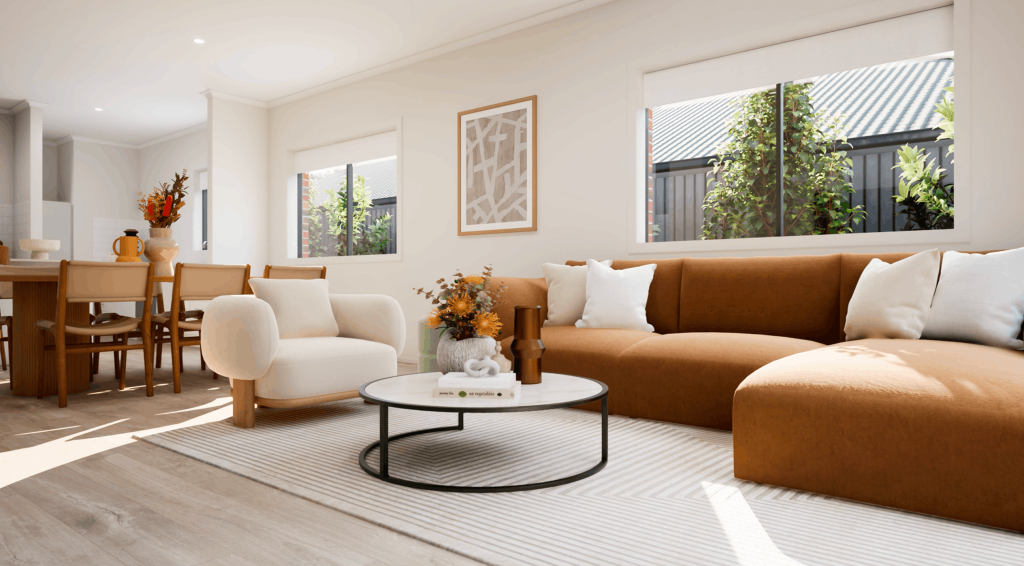
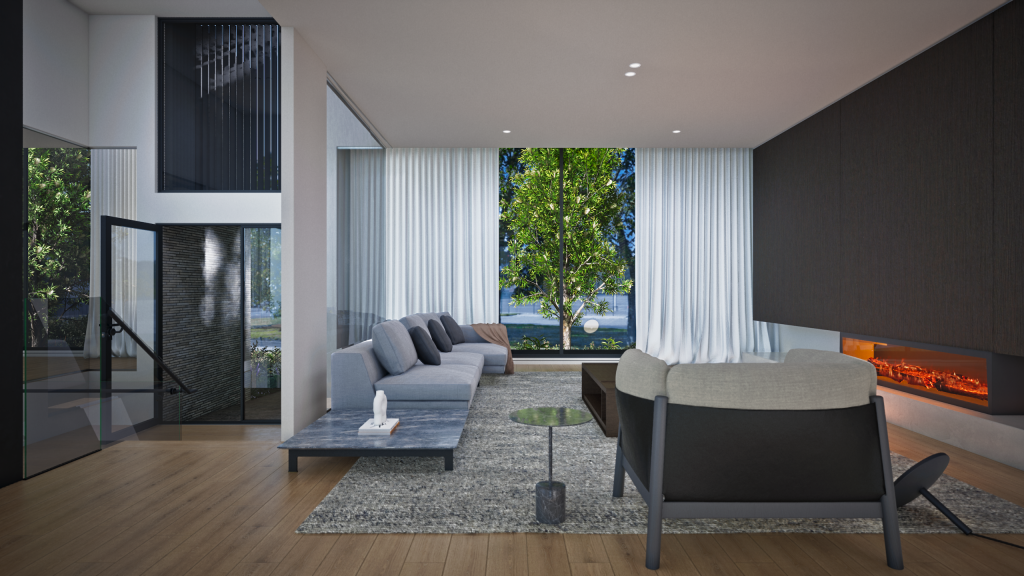
A digital home experience is not a virtual tour. Virtual tours show buyers a 360 tour of a home that has already been built. A genuine digital home experience is interactive: buyers move through a home on their own terms, change what they see (including facades/elevations, floor plan options, fixtures and finishes), and understand what choices cost them.
- First-person exploration. Buyers explore a photo-real, interactive 3D environment – not a slideshow – understanding scale, flow, and spatial relationships the way a physical visit would.
- Facade and floor plan switching. Buyers compare facade/elevation and floor plan options in real time. Choices that feel abstract on a spec sheet become visually reality (well digital reality).
- Fixtures and finishes. Buyers visualize tile selections, cabinetry, benchtops, and floor finishes across the whole home. Decisions become less intimidating when buyers have the ability to visualize what their selections look like together in their home.
- Real-time pricing. Buyers see how their choices affect the total price as they go – creating natural upsell moments and reducing the back-and-forth that stalls decisions later.
The result: a buyer who arrives at first contact already engaged, already informed, and already emotionally invested in a version of your home. That’s a materially different conversation from a cold enquiry.
Where it adds value across the sales journey
- Your website. Converts passive browsers into active explorers, generating qualified leads who have already seen and configured your product.
- Your sales center. Extends what a consultant can show on a large-format screen – designs not on display, configurations not physically staged, all demonstrable in the room. Consultants can personalize the experience in real time, walking homebuyers through options that match their budget and preferences on the spot.
- Design studio appointments. Buyers who arrive having already explored finishes and fixtures make faster, more confident selections – and they’re more open to upgrades. When a buyer can see exactly what a premium finish looks like in their home and what it adds to the price, the conversation shifts from persuasion to confirmation.
- Remote follow-up. After an initial meeting, a consultant can share a link to the homebuyer’s saved configuration – their chosen facade, floorplan, and finishes – so they can revisit it at home, refine it, and share it with a partner or family member. Buyers who return to explore further are signaling active consideration, giving your team a clear prompt to re-engage.
The display home and the digital experience work best together
Display homes remain essential. But they operate at the end of a journey that starts weeks earlier, in digital channels. A digital home experience doesn’t replace that walk-through – it extends your display home’s reach online, in your sales center, in your design studio, and across every follow-up. It helps your teams work more efficiently, your buyers decide faster, and your business converts more sales.
Ready to extend your display home online? Book a digital home strategy session with the Away Digital Home team.