Where time really goes in the sales cycle
If you map out the journey from a buyer’s first inquiry to signed contract, it often becomes clear that much of the time involved has little to do with negotiation or hesitation. Much of that time is spent helping buyers understand the fundamentals of the home, from how the layout works to what is included. Buyers spend weeks trying to understand layouts, inclusions, and how everything connects together. Sales teams spend just as long walking them through the same foundations, often multiple times.
When demand is high and margins are comfortable, that repetition is easy to overlook because deals still progress. When budgets tighten and teams operate leaner, the cumulative cost of those repeated explanations becomes harder to ignore. Consultant hours are finite, and every meeting spent covering introductory material reduces the time available to move committed buyers toward contract.
The weight placed on people
The sales process homebuilding has built over time are based around physical touchpoints and a collection of marketing materials that have evolved at different stages of the business. Display homes create emotional engagement while architectural rendering services bring designs to life. Each of these tools contributes value, but it’s not so often that they function as one integrated system. Sales consultants naturally step in to connect the dots, translating plans into lived spaces and tying marketing materials back to real-world decisions.
This model has supported the industry for years, but it relies heavily on people to carry context and continuity from one stage to the next. As buyer expectations increase and teams operate leaner, more of the explanatory workload sits with consultants who are already balancing multiple inquiries at once.
When a buyer sits down with a consultant for the first time, the conversation often begins with orientation. Floorplans are explained and inclusions are discussed. That early-stage education is necessary, but it means a meaningful portion of consultant time is spent building baseline understanding before decisions can progress. Across dozens or hundreds of inquiries, those introductory conversations add up, extending overall sales timelines and increasing the amount of effort required to convert interest into a signed contract.
Helping buyers understand earlier
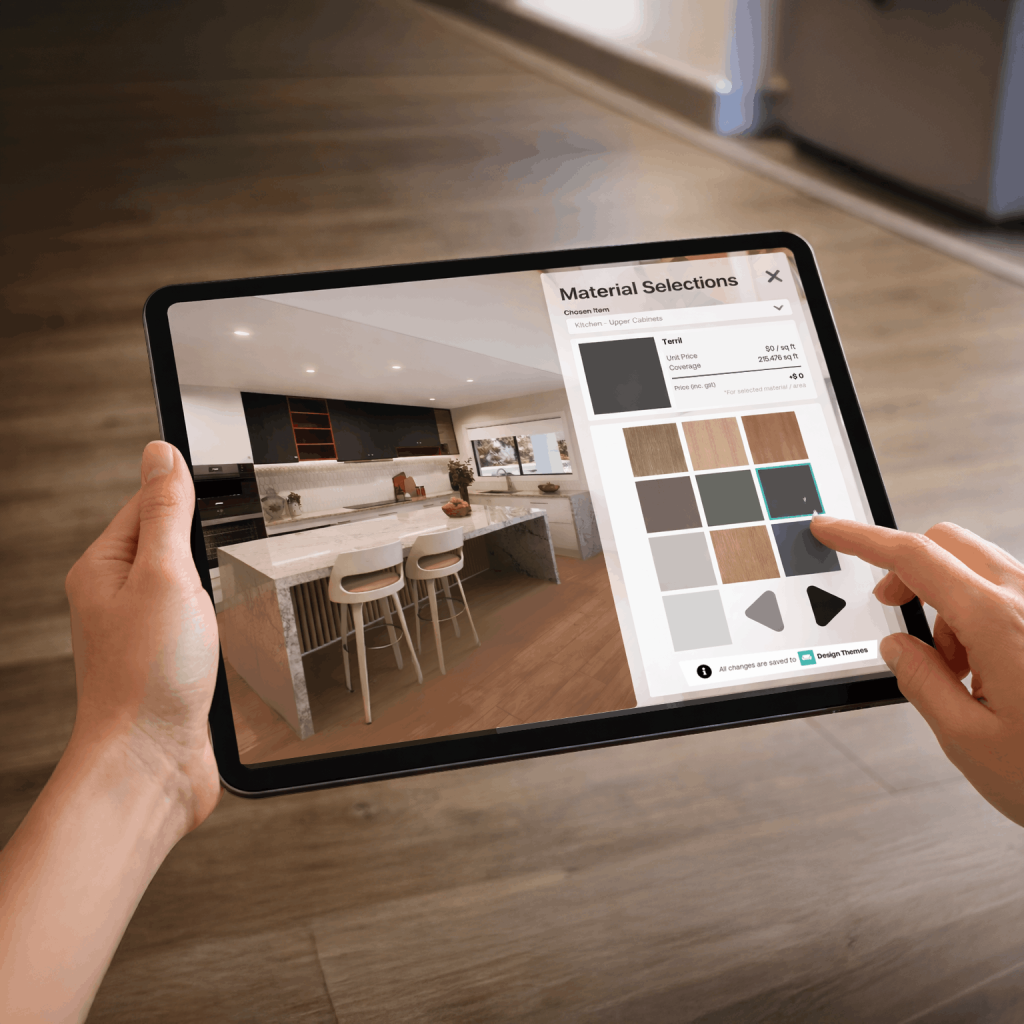
Interactive architectural visualization offers a way to reduce that distance without compromising the experience. When buyers can explore homes visually, understand spatial relationships, compare layouts, and revisit inclusions on their own schedule, they arrive at conversations better prepared. They are no longer building understanding from scratch; they are refining decisions they have already begun forming.
This does not reduce the importance of the consultant but instead, changes how their time is used. Instead of spending most of a meeting walking through the basics, consultants can focus on helping buyers make decisions with confidence and move more directly toward selecting options, confirming scope, and progressing the deal. Time between first inquiry and contract naturally reduces because less time is spent covering ground that buyers can now understand on their own.
Consolidating marketing effort
Builders routinely commission 3D rendering services, update facade imagery, refresh brochures, and produce new video assets as product lines evolve. Each update requires coordination and budget, and each asset may need to be revised independently, adding both cost and complexity.
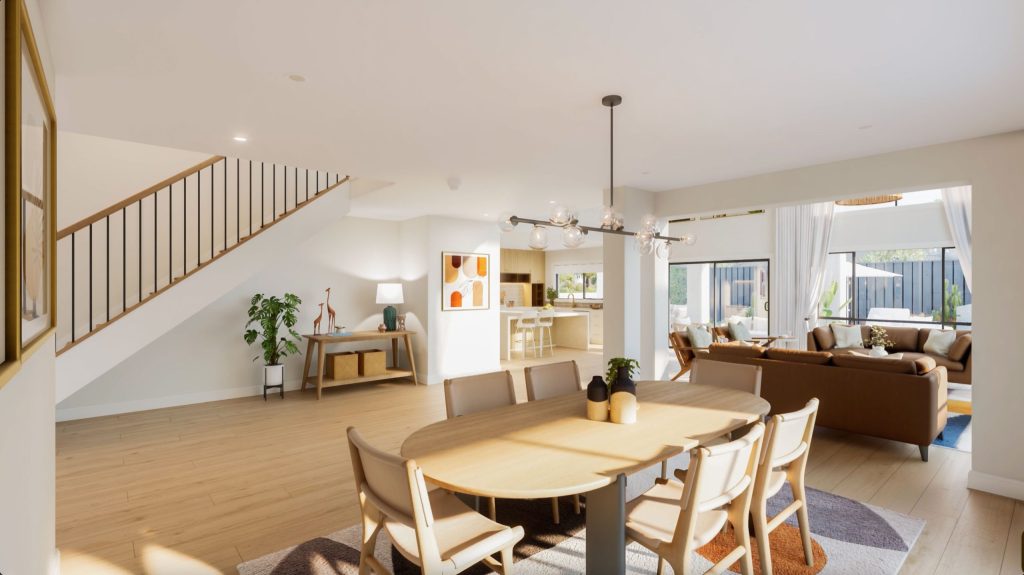
Away Digital Home was designed to bring those visual assets together in one place. The platform allows builders to present home designs through interactive architectural visualization while also generating the renders, videos, and 360 tours typically produced as separate marketing outputs.
By consolidating architectural rendering services, 360 tours, video, and interactive exploration into a single environment, the platform reduces duplication and simplifies how visual content is managed. Updates can be made once and reflected across the experience, allowing sales and marketing teams to work from the same source of truth and reducing the risk of inconsistencies between what buyers see and what teams present.
Doing more with existing teams
Spending freezes and labor shortages are part of the reality in homebuilding, so adding headcount is not always practical. Builders need systems that increase capacity without increasing payroll. When buyers can self-educate visually and consultants can focus on advancing decisions rather than repeating explanations, sales capacity expands without expanding teams.
An investment in efficiency and revenue
These tools and systems sit within a broader effort to improve how efficiently interest converts into contracts. Rather than adding another marketing layer, they can help reduce duplication, shorten the path between inquiry and decision, and make better use of the teams already in place. Over time, small gains in sales timelines, marketing production, and consultant capacity begin to show up in margin.
Selling homes will always depend on trust, experience, and human judgment. Digital infrastructure does not replace that dynamic. It simply supports it by absorbing some of the early-stage explanation that traditionally sits inside repeated conversations. When part of that workload is carried by systems rather than solely by people, growth becomes easier to manage without adding weight to the organization.
Builders who move part of that workload into infrastructure tend to scale more smoothly than those who rely on people and physical display homes alone.